Showing posts with label water. Show all posts

Wednesday, March 27, 2013

Cups and Kettles

Diabou is now the second-youngest kid on my compound. She’s taciturn, obstinate, and small for her age. She doesn't like new people and refused to acknowledged my existence for my first three months at site. She has a big head and little arms and thick, slightly bowed legs, like a tyrannosaurus. She understands things just fine, but frequently pretends to have not heard when people tell her what to do, and she doesn't speak very often. When she does talk, it’s in this raspy, high-pitched little mouse voice, like a gravel-filled squeaky toy come to life.

Obviously, she is my favorite.

After the initial cold shoulder she warmed to me, and now we're friends. She sits on my feet when I'm trying to read, delivers little piles of mango leaves to my doorstep, brings me her peanuts to shell because she knows I don't like raw peanuts and will not keep a portion for myself.

She calls me “Ada” and she's taken to padding into my hut in the early mornings to perch silently on the corner of my bed and watch me boil water, attempt to sent texts, organize the junk on my table, whatever I happen to be doing. Sometimes after lunch I'll let her come in and play around, like this:


She spent about thirty minutes pouring water back and forth, seeing how high she could lift the pouring cup and swishing things around. She spilled a lot, but nothing disappears faster than water off a cement floor in hot season, so I didn't mind. Also, it was kind of mesmerizing, like a Rube Goldberg contraption.

Friday, January 25, 2013

Siblings Abroad: The Island Life

After our mom flew back to the U.S. my brother and I went to Cape Verde, a little Portuguese-and-Creole-speaking island nation off the coast of Senegal.  We didn't get out to as many of the islands as we would have liked, but we did enjoy the ridiculously blue water at the beaches around Praia, on the main island of Santiago, and we walked along the black sand beaches and climbed up the volcano on Fogo.


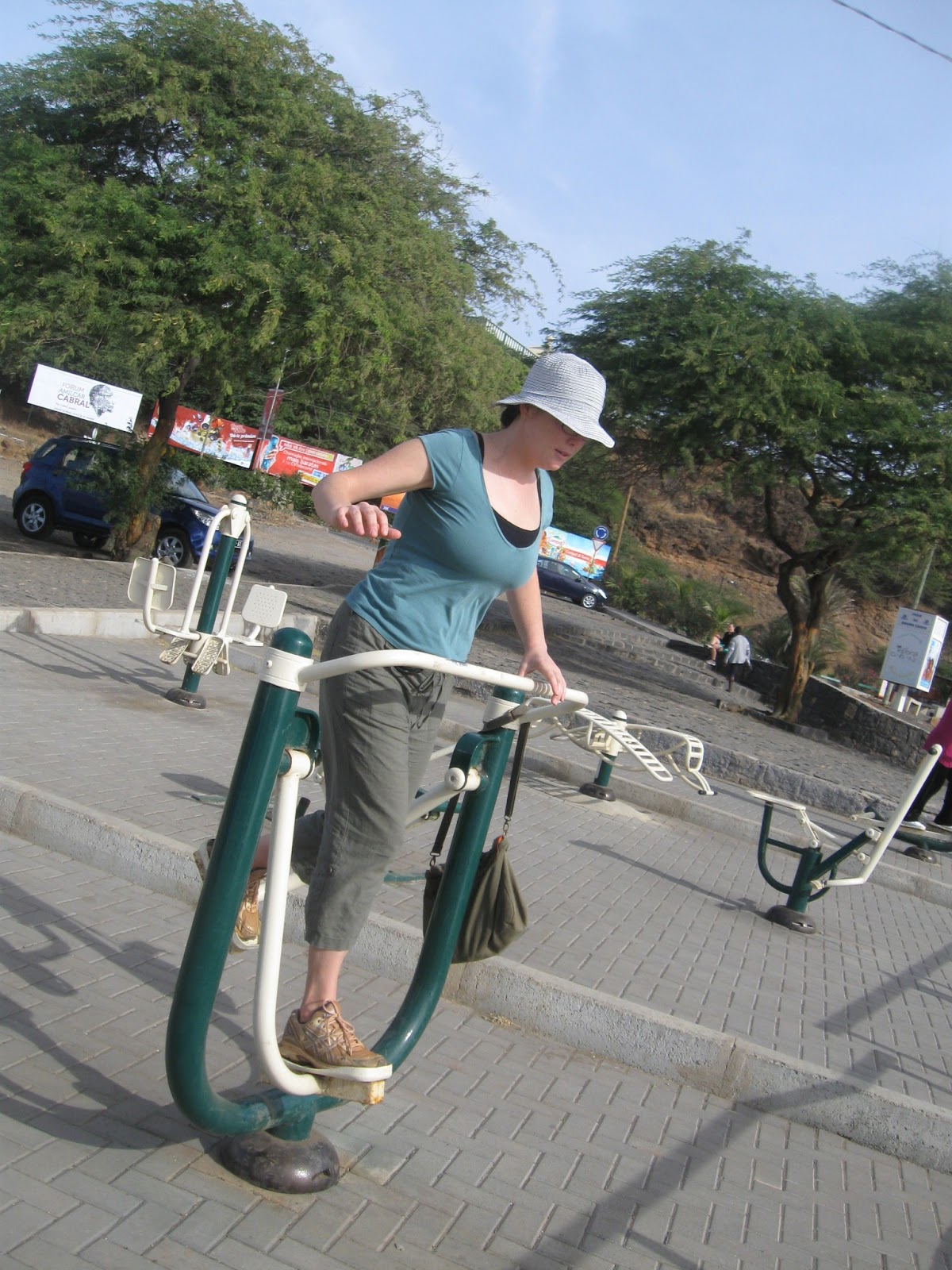
One of the nice things about Praia are these little outdoor gyms plunked down along the shoreline -- I thought they were playgrounds for kids (and kids do seem to like them) but there were a decent number of adults using them, too. Also, tidepools.


To get from one island to another you can take a ferry or a plane. We went to a little travel agency and got tickets to fly to Fogo and then ferry back; it was just what worked for our schedule and price range. The airport was pleasant and had wireless internet and truly magnificent vending machines. Hot chocolate, cold beer, ginger soda, Kit Kats, ham pizza-flavored chips, yogurt flavored gummies - you name it and drop some change in and a metal coil will push it your way. The prosciutto-flavored Ruffles were really good, but I think the best snack we had were the bananas. The Cape Verdian bananas are exponentially better than the bananas we get in the U.S.

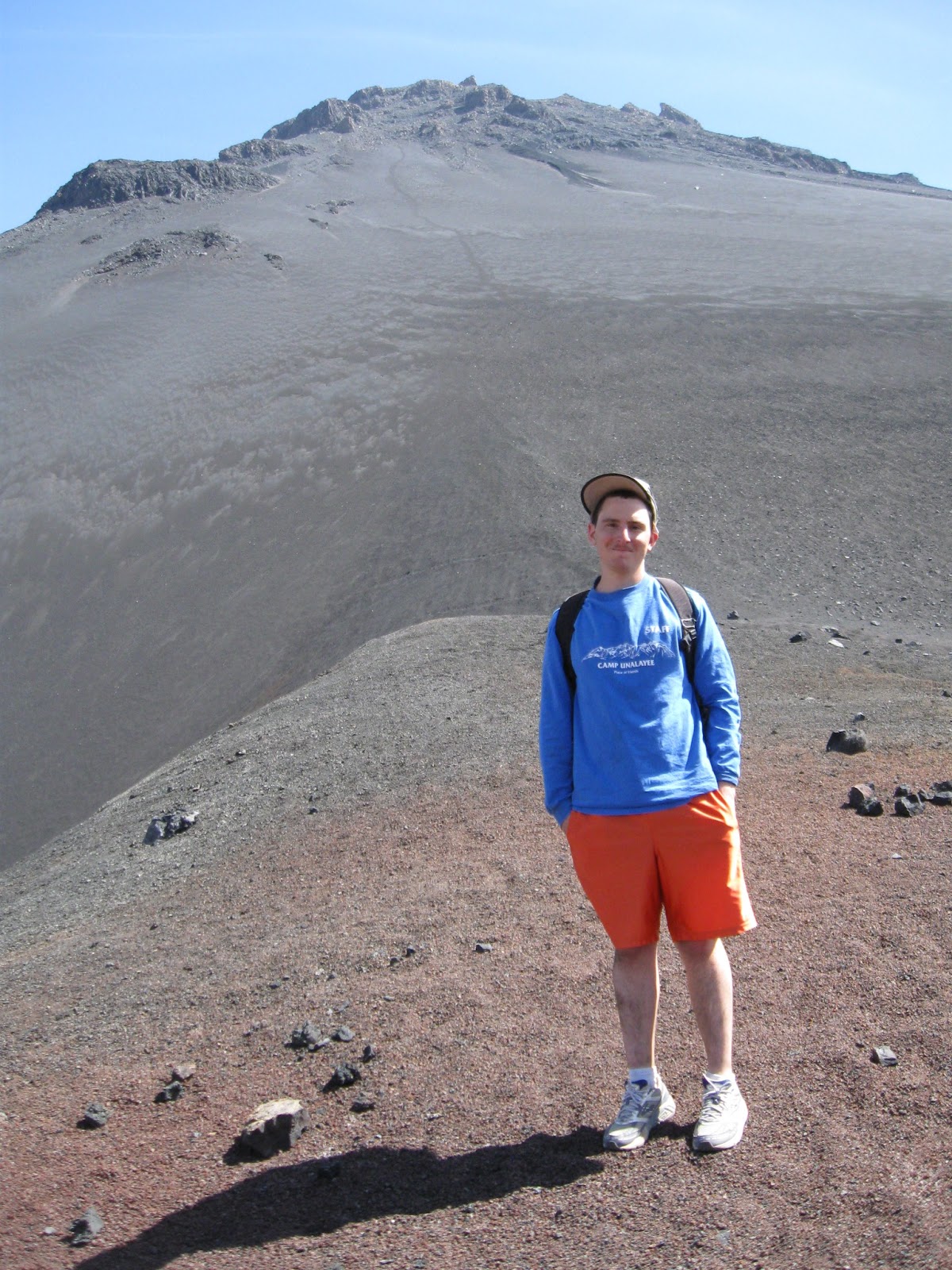
We spent an afternoon in Sao Filipe, the main city on Fogo, and then headed up to the caldera to see the volcano. It was beautiful, and it was cold, especially at night. The next morning we got up early to hike up to the volcano peak (2,829 metres (9,281 ft) - the sunrise was nice, and the shadow of the peak on the rim of the caldera was really neat.


 Once we got up to the top there were sulfur vents and a spectacular view ans two gaggles of pleasant enough middle-aged French and Belgian tourists (though one of them apparently thought that French was some sort of secret language and made a comment about our inadequate footwear; she was quite startled when I replied that our sneakers were working just fine, thanks).


At the tippy top there was a part where you had to scramble up and over using a cable hand-rail, and, feeling a little loopy from the altitude, I chickened out. Ben and Josef, our guide, went all the way up, though, and then came back for me. They were quite gracious about it, even.


   Like Mt. Shasta, coming down was much more fun (and a zillion times faster) than going up. On Fogo it was gritty volcanic sand instead of snow (our shoes were packed painfully full of rock powder by the time we had bounded all the way to the bottom) but it was still really fun to careen full-speed down a slope that we'd spent all morning walking up.


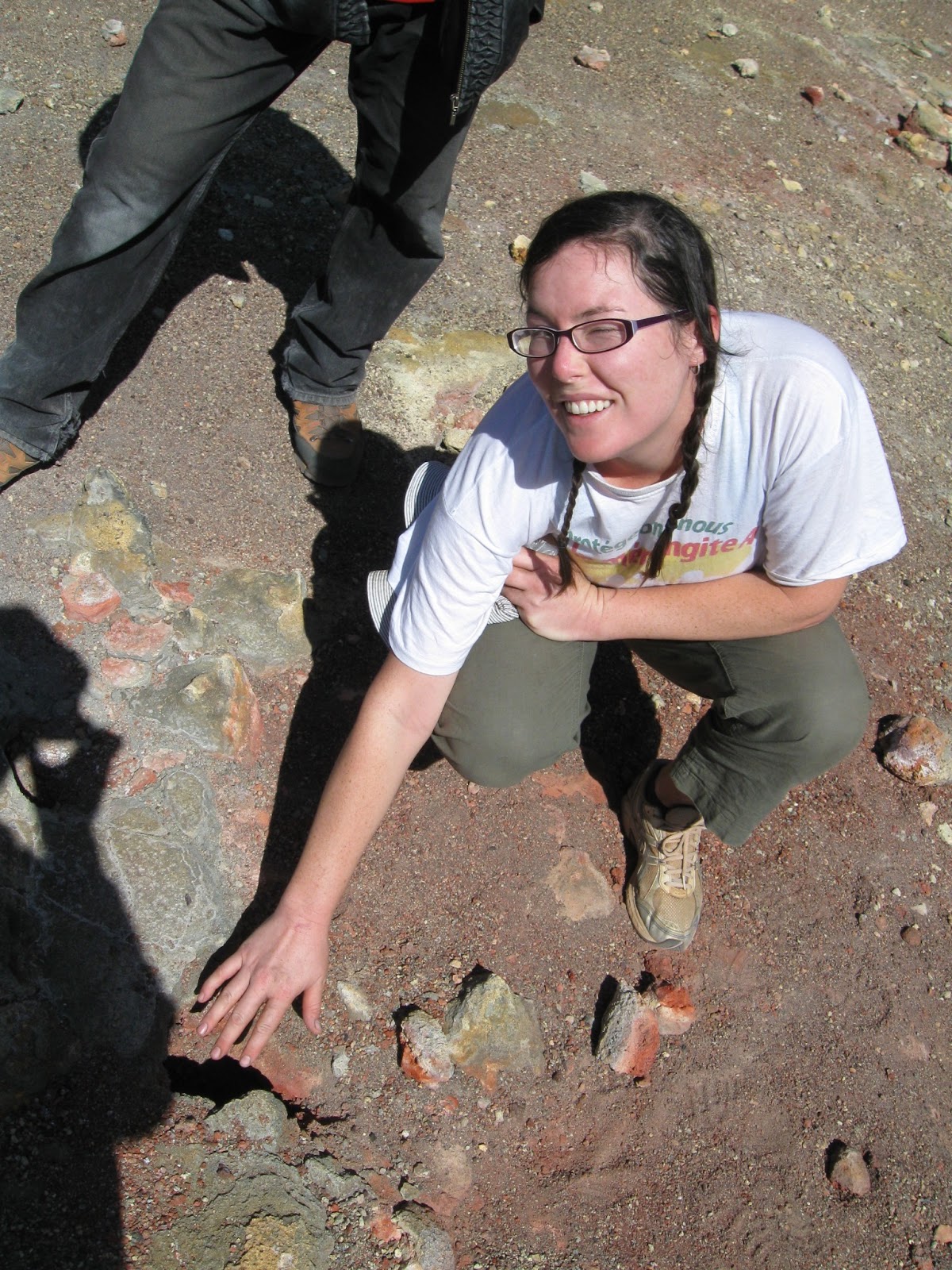
There were more sulfur vents at the bottom of the hill (I stuck my hand near the opening of one and it was hot and steamy and smelled of egg) and a variety of other minerals that made for these lovely rainbow-ish swathes of color across the smaller craters. 

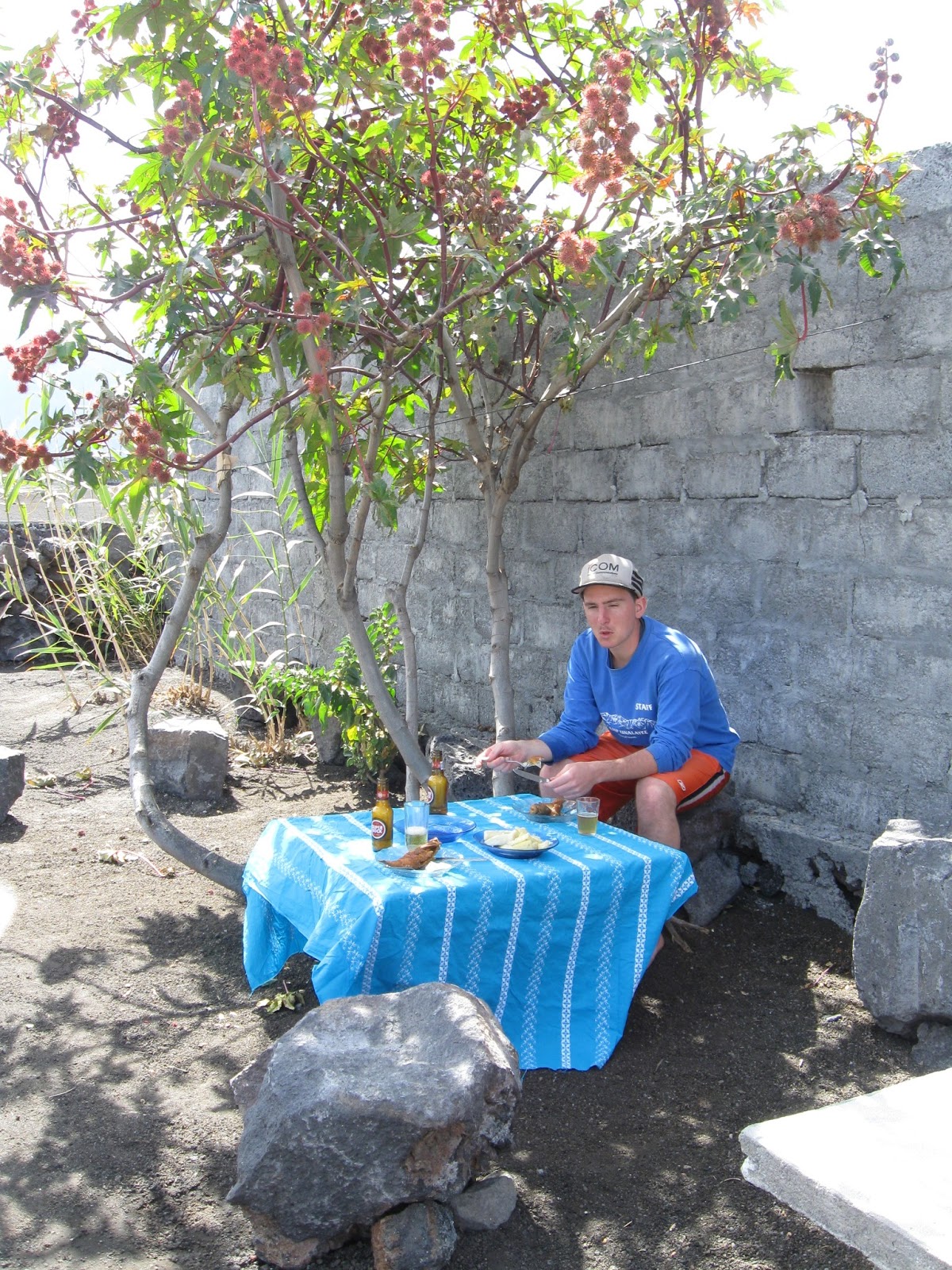
We cruised back to the little compound where we'd let a room, eating tiny apples from the apple bushes and tart grapes from the grape bushes (impressive that things grow in such a sparse landscape) and had a very nice lunch of leftovers. 


I have to go back to my site now (work stuff beckons) but will be back in a week or so to post the best of the rest of my travel photos. Hope you're well & enjoying 2013 so far!

Wednesday, December 5, 2012

Laundry

During the first year of my service I washed all my own laundry in plastic tubs (baignoires, as we call them here) with a washboard and soap packets. I washed socks, shirts, towels, everything, and I was passably competent (everything came out smelling fine at least) but never really became a stellar washing-lady or anything. There's nothing particularly awful about pulling water, carrying water, mashing the clothes around, and wringing them out, but there's nothing particularly great about it, either. 

The laundry area at the Regional House
I like hanging things out to dry, though. At the Regional House we have lines set up; in village people just drape clothes over fences or wherever and I have a couple little lines running over my latrine enclosure behind my hut so that I can discreetly dry my underthings. Drying laundry in the hot season is like magic - things seems to insta-dry. In the rainy season it's more of an exercise in futility, just an un-fun game where you hope the sun comes out long enough to get rid of the dampness before mildew starts to set in.

Laundry lines at the Regional House

Nowadays my laundry mostly gets done in village and it's my host sister Mariama Kesso who does the bulk of the washing. The first time I gave her my clothes to wash they came back so clean that they were an entirely different color (they had all been slightly orange, from the dust) and I gave up trying to wash things myself. I still launder my own underwear and things but she takes my pants, shirts, and sheets and washes them on Sundays, when she does her own washing. She does a better job than I ever did and is happy to earn a few extra mille every month, so it's a win-win situation. 

Tuesday, October 9, 2012

Milk Tasting 101

Despite being fairly lactose-intolerant, I happen have opinions about the different kinds of powdered milks that are available, both here and in America. As a camper and then counselor at Camp Unalayee, a fantastic backpacking summer camp in Northern California, I developed an appreciation for Milkman low-fat powdered milk, with its bright orange box, hermetically sealed pouches, and "a kiss of cream!" Compared with the generic non-fat sacks of milk powder, which had a dull flavor, looked grayish, and always left behind gummy little clumps of residue, Milkman was a delicious, smooth, slightly rich-tasting treat. I experimented with powdered soymilk, which was fine but somewhat unimpressive, and eventually went back to Milkman and started carrying little packets of LactAid tablets around with me to mitigate the rather unbecoming symptoms of my digestive tract's inability to process lactose.

When I first arrived in Senegal I avoided milk products altogether, figuring that my poor stomach had enough to contend with already. Eventually, though, I started mixing a little bit of powdered milk into my morning oatmeal and making NesCafé-au-lait-en-poudre. When I started buying more milk Wouri, one of the local boutique owners, gave me a crash course in the merits and characteristics of different brands of milk powder. According to him, Halib, which is made in Senegal, is the best because it's pure whole milk, just dried and powdered. The other brands, VitaLait and Bonilait, are actually made by taking powdered non-fat milk and adding in vegetable fats to "refatten" it, giving it the richness and texture that people here prefer. Pretty much all the people I talked to in my village preferred Halib, but also liked VitaLait quite a bit. 


There are a few other brands but Halib and VitaLait are by far the most widely available and most popular. I wondered if other PCVs had a similar interest in powdered milks. They didn't, but they agreed to participate in a blind taste test of three kinds of powdered milk anyway, and the results were somewhat surprising. 

Of all the milks, VitaLait (Jar B) was the clear loser. It was described as "watery", "bland rice water", and "sour." It didn't mix in as smoothly as the other brands and left little globs of milk powder on the sides of the jar. Personally, I don't mind VitaLait, but I think it tastes a little plastic-y, and has a slight chemical aftertaste, but that could be partly because I don't like the idea of it being stripped of its milk fat and then artificially" re-fatted." It reminds me of how nice chocolate is made with whole cacao nuts, with the cocoa butter left in, and cheap, waxy chocolate is made by extracting the rich  cocoa butter for use in other products and then adding in cheaper, worse-tasting oils and waxes as fat-based fillers. 
Halib (Jar A), the brand that left in the milk fat instead of replacing it with vegetable fat, had mixed reviews. Some tasters really didn't like it, describing it as "dry", "enh", "fruity rotten" and "slightly fecal-tasting." However, it turned out that some of these people didn't drink cow milk in America, which might have created a bias. We realized that people who did drink cow milk back in America seemed to tend to prefer Halib, saying that it tasted "more milky", "grassy in a nice way", and "no poop taste." I think Halib is good, and agree that it has a grassy, bovine taste and I'd prefer Trader Joe's Unsweetened Organic Soy Milk, but it's not bad for the time being. 
Finally, to me Bonilait tasted exactly like non-dairy creamer. It was the whitest, finest, most opaque of all the milk powders, and it didn't taste bad. It just tasted like plain Coffeemate. The people who didn't drink cow milk before Peace Corps really preferred it, saying it tasted "good", "like Momma's teat", and "good." The people who didn't like it described it as "malt-starch-sugar", "meh", and "no."

Everyone agreed that powdered milk was not their preferred dairy or dairy-ish drink, and also that room temperature milk, powdered or otherwise, isn't very appealing. Also, all of the powders tasted pretty good if you mix them with instant coffee and sugar and leave them in the freezer for awhile.

(Many thanks to Chrissie, New Frank, Janet, Flatrick Bair, and Katie O. for making this post possible.)

Monday, August 27, 2012

The Office Moat

This past week I spent a few days at the Thiès Training Center, helping with a few sessions during the latest training groups' In-Service Training (IST).
 
From there I headed over to Dakar, where I'm getting a few things done at the office (meetings, printing, reimbursements for rash-cream, etc) while I'm up here. While it's been lovely to have electricity pretty much all the time, warm showers at the transit house, and plentiful fruit vendors (Plums! Pears! Tangerines! Amazing!) I've also been reminded of why I'd much rather sit out rainy season in a little village than spend it Senegal's capital. 

The Moat: receding, but still very much present.
Dakar doesn't exactly have well-functioning sewers or an effective urban drainage system, so when there are heavy rains gutters overflow, raw sewage burbles up through access holes, and many streets are thoroughly awash with filthy, murky runoff water. Yesterday, after a heavy morning downpour, the water was so deep in parts of the Almadies neighborhood that taxis and other normal-type cars couldn't make it through the reach the main office and the main street by the transit house, where I was, briefly became a frothy river with a surprisingly swift current. Today the water has drained off, for the most part, leaving only the muddled pond that fills the road in front of the office for most of every rainy season here. We were able to get from place to place pretty well, carefully making our way around and over the filthy runoff puddles and streams in an impromptu little game of high-stakes hopscotch. 

Thursday, April 12, 2012

Hut Sweet Hut

Buckets are such a big part of my life here. I've really come to appreciate a good, sturdy bucket, especially one with a nice lid. Here's my bath bucket (with fancy sieve/soap caddy), my food storage bucket, and my gaz tank. 


My nice burner broke the other day and this little one (the only kind available in village) that doesn't have the nice pot-guard that my other had. I use my gaz to heat up water for coffee and instant oatmeal most mornings, and during cold season I'll heat up a little pot of water to add to my bathing bucket to take the edge off the chill of cold water. Some volunteers just leave their bucket out in the sun all afternoon, but because of the shady mango tree (which is great and I love) next to my hut I've had very limited success with that during the cold season. Right now it's quite hot, and I'll just leave my water buckets (which are exactly the same as my food storage and dish storage buckets) in the coolest corner of my hut and hope they don't get too warm.


This is my wooden table. It pretty much looks like this on any given morning, with my silver water filter, various mugs and water bottles, sunblock and toothpaste, and random this and that. It's a really nice table, I like it a lot. The metal water filter is nice, too, it keeps water much cooler than the dark plastic filters that some of the volunteers have.


The table has handy shelf for stacking all sorts of things, and there's a bamboo (or whatever it is, everyone in village calls it bamboo) rod for hanging clothes to dry or keeping stuff away from the rats and bugs on the ground level.


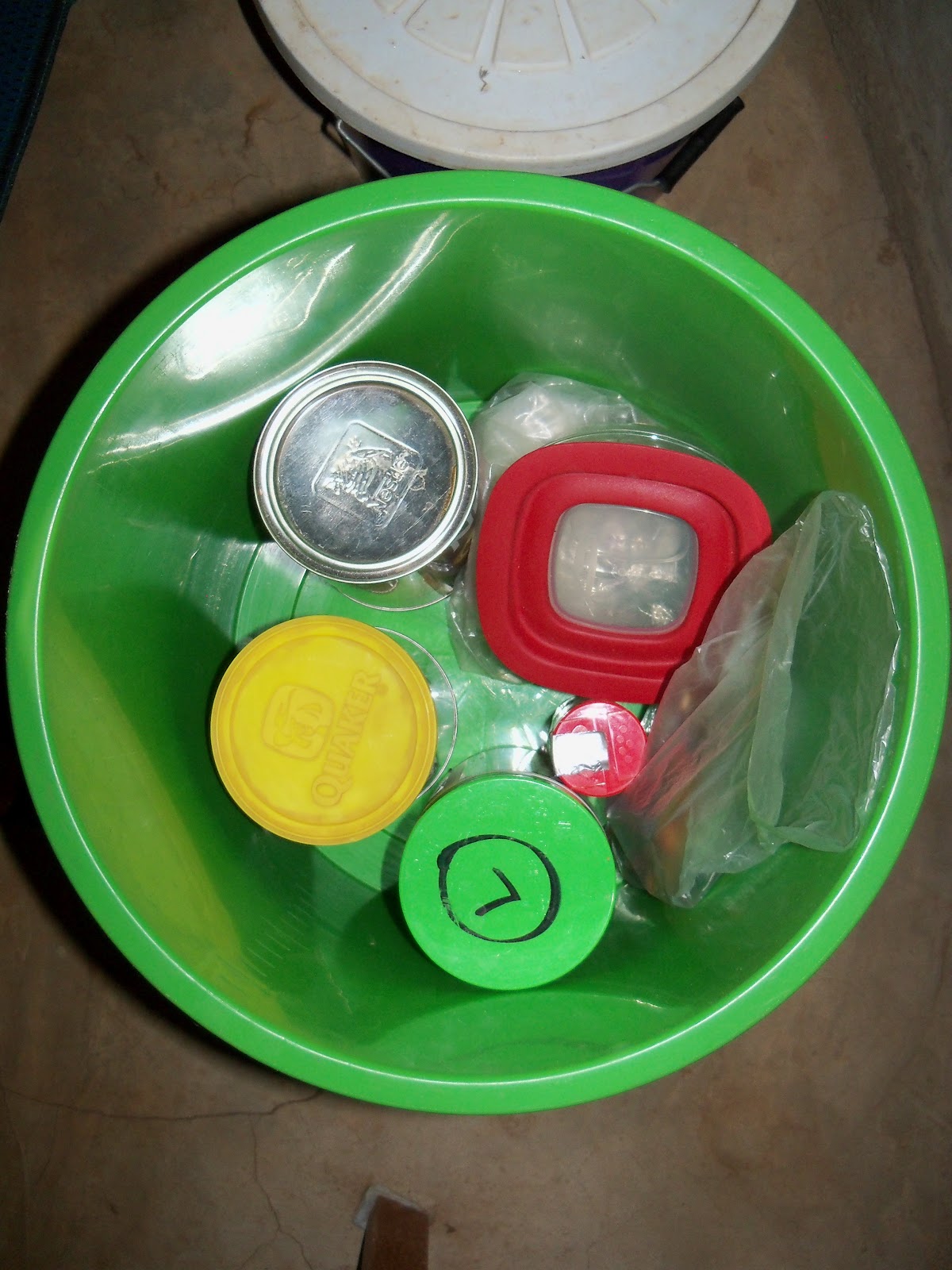
I store clothes and things in my trunks, and then I store important things in my little suitcase because it zips up, which keeps dust and critters out. The oatmeal cans also help with the bug situation, it's easy to sweep under the trunks when they're propped up, and that keeps ants from building trails along the fine cracks in the cement, and keeps the spider population in check, too.

Monday, November 28, 2011

The North

To celebrate Thanksgiving I decided to make the trip up North, to Ndioum, where some volunteers were hosting a big Thanksgiving dinner.

It was quite a trek.

Along the way we noticed many things that were different up there - Meera and I made a list, actually.

Dinner was really impressive and overwhelmingly delicious and here is the Picasa album to prove it.


Hope you all had a very happy Thanksgiving, too!