Showing posts with label NGOs. Show all posts

Monday, April 15, 2013

Maternal and Child Health Training: The Last of the Work Stuff

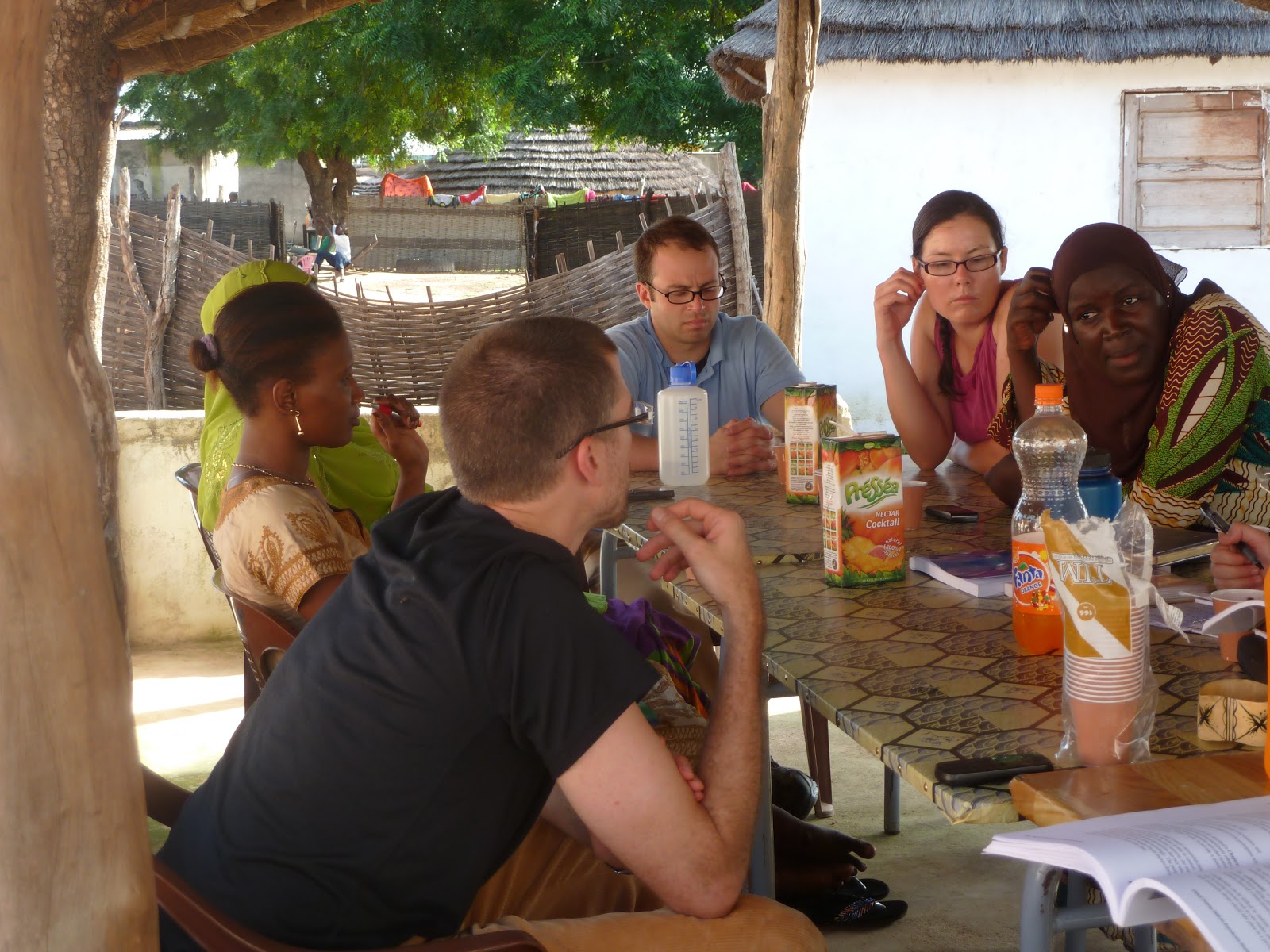
In March the maternal and child health training for "Neighborhood Aunts"that we've been trying to get off the ground for months actually happened, and despite some communications difficulties (the cell phone network went down for a week and a half) it went really well. “Neighborhood Aunts” are women who have been selected by their villages to serve as point people for disseminating important health information and encouraging healthy behaviors. Because they live and work in the community they are ideally placed to serve as health resources and can encourage healthy behaviors, such as attending pre-natal visits and seeking early treatment for malaria. 


For the most part, the midwives would lead a discussion or lecture, and then the women would break into small groups to practice leading health talks and having conversations about a given topic. Then, one by one, they would practice leading a health talk with the whole group, and the midwives would add or correct things as needed. The training was based on the "Neighborhood Aunt" curriculum laid out by the Senegalese Ministry of Health, and the schedule went like this:


Day One
·        Orientation and discussion of roles
·        The importance of advocating for ante-natal care
·        Pre-natal visits, attended births, post-natal visits, and miscarriage
·        Family planning and reproductive health

Day Two
·        The importance of advocating for child health (0-5 Years)
·        Vaccinations, seeking early treatment for illness and injuries
·        Community mobilization methods, implicating community leaders
·        Creating and managing community health funds
           
Day Three
·        Planning, implementation, following up, and reporting activities
·        The importance of the "Neighborhood Aunt"
·        Evaluation and distribution of monthly activity reporting forms
·        Review and closure


There were also group discussion about why maternal health is important, and the participating women spoke frankly and passionately about how women are often undervalued or seen as replaceable, and how that needs to change. They had the chance to ask all sorts of questions, talk about the reasons that people in their communities wait until the last minute to seek medical care, to discuss why some people are opposed to family planning, and to reaffirm the importance of having "Neighborhood Aunts" in a village.

The Community Center where the training was held is also where local youth can take vocational courses for trades like tailoring and catering, so the lunch and coffee break prep for our training also served as a practicum for a group of catering students. It was really fun to hang out during lunch and coffee breaks, both because the people serving the food were intent on showing off their skills and because all of the women were so obviously delighted at being served a fancy lunch that they didn't have to make from scratch themselves. I think it made them feel important, which made the training feel more important, too.

Once the chairs were rented, the radio announcements made, and the lunches all paid for, my main role was just to sit in the back of the room, taking pictures, occasionally holding fussy babies, and nodding approvingly whenever anyone looked over at me. About half the participants came from other villages, took three whole days out their lives, to attend the training, and it was great to see most of them really enjoying the training, asking good questions and taking their role very seriously. Best of all, the midwives were really pleased, and after the training wrapped up they talked and talked about how to best implicate the newly-qualified "Neighborhood Aunts" in their attended birth and pre-natal visit promotion activities. 

Monday, October 22, 2012

Americans in Saraya

It's been a busy month over here in Senegal. PCVs Marielle, Annē and I spent the last few weeks prepping for and then facilitating a visit from a team of Americans from the NGO peacecare. (Honestly, Marielle did the lion’s share of the leg- and paperwork, but we all pitched in to run preparatory trainings and take care of loose ends.) The team came to work on an ongoing cervical cancer screening and treatment project, and having them here was a great experience, we had a good time and I learned quite a bit. I would write more about peacecare and the work we’ve been doing with them, but I’ve already done so, here and here and here.


Cervical cancer screening and prevention is an interesting and worthy project, one that’s very valuable both for the local Senegalese communities and for the visiting American medical students and residents who are able to spend a little time working with Senegalese health professionals and seeing how the provision of health care is carried out in another part of the world. It was really nice to see Andrew again, and great to meet Gabi, Katie, Angel and Charles. Another peacecare team is scheduled to come to Kédougou in February of 2013, to lead cryotherapy (freezing of pre-cancerous lesions) treatment trainings for local health professionals, and we’re already looking forward it. 


And now, in somewhat scrambled order (it's hard to drag lots of photos around in Blogger sometimes), are photos of some of the highlights of the October 2012 peacecare trip.


Marielle and I walking; kids playing with red rubber balls during a screening day in a gold mining village; Charles (one of the visiting residents taking an out-the-window snapshot of the Kédougou mosque.


The whole team posing after a meeting with the top Kédougou Medical Officials; someone giving me Skittles; Patrick Linn greeting the Saraya village chief as he gave out Senegalese names to the newcomers.


Me translating for Charles while Madame Diop looked on; Mariama (who's favorite joke is that she's Canadian)and I talking shop; Marielle leading a stroll out to the fields around Saraya.


Annē and Patrick's host siblings; their brother making tea on their host family's compound; the kids leading us out to visit the peanut fields.

Crossing a stream on our way to the fields; Angel (one of the visiting residents) came thisclose to sticking the landing. 


Walking among the peanuts; loading into one of the hospital trucks to go out for a screening day.


Sitting through a meeting; eating ceeb u jen (fish and rice) and maafe tiga (peanut sauce) for lunch; some boutiques in the Kédougou market.


A "Tata" car in Kédougou; Fatou and I having similar thoughts during a meeting.


The Americans giving us wonderful, thoughtful, delicious treats; Andrew reliving the delight of being given fancy American snacks in Africa.


Fatou (the main screening trainer) and I jumping rope. It was a short little kids rope. She was better.

Charles and his fan club; the most amazing little kid just chowing down on some rice.


Rocks waiting to be crushed into dust (and boiled with mercury to separate out the gold); fancy fancy ceeb u yap (rice with meat).


On the path from the peanut fields; Sajou, in her fields with the Saraya Health PCVs.


Annē and the speculums on a screening day; Charles smashing an unripe baobab pod to see what was inside. (It was unripe baobab stuff.)


Annē/Sajou, LaRocha/Adama, Charles/Ibrahima, and Angel/Mariama - screening team extraordinaire! 

Wednesday, February 29, 2012

Back to the Big City

And by big city I mean Kédougou. With all the pre-election protests that were going on in the bigger towns and cities I've been staying in my village, Salémata, where it's been lovely and calm. Right before Election day I did a lot of hanging out under the mango tree, playing with the baby, making things out of paper, and listening to the BBC. (I would like to take a moment to thank the BBC World Service for existing.) As it turns out, voting during the first round of the 2012 presidential elections in Senegal went remarkably smoothly, even in Dakar, and I'm now allowed to come in to the Kédougou Regional House to check e-mail and stock up on oatmeal and all that good stuff.

My sitemate and I decided to bike in to Kédougou today. We've done it before, we left early in the morning and were expecting it to get hot (which it did) but to make it to the house before lunchtime. We were not expecting the little cloud of bloodsucking tse tse flies that showed up on the outskirts of village and stayed with us for about 45 kilometers (28 miles, about halfway to Kédougou). At that point, exhausted from trying to bike and swat flies at the same time, we stopped in the shade of a baobab tree. It was getting hot, and since we'd just been passed up by the transport van that we'd opted not to take, I was regretting having been so enthusiastic about the whole biking thing. Just then, while we were sitting in the dirt next to our bikes, looking sweaty and dusty and fly-bitten and probably more than a little pitiful, a beautiful pickup truck came along and stopped in front of us. The passenger opened his window (Air conditioning! Fancy.) and asked if we were volunteers. We said yes, and he said he worked with the Ninefesha Hospital, he knew the volunteer Kadjabi (our friend Meera) and that she did good work so since we were with Corps de la Paix we were welcome to throw our bikes in the back and hop in the backseat and come to along Kédougou. We were thrilled. And grateful.


Anyway, I made it to the house and now I'll be around the next few days, working on a few things and (inchallah) uploading some photos and catching up on the blog.

Saturday, February 11, 2012

PeaceCare: Part I


So, the PeaceCare team arrived in Kédougou about a week and a half ago and was made up of doctors, residents, a med student, and a couple communications people. (One of the doctors is from Callahan, CA, near where I went to summer camp, it's where we pick up camp mail and stuff, but it's a town so small that GoogleMaps doesn't quite know where it is.) We started out in Kédougou, where we did a lot of meeting-and-greeting and then the American doctors lead a refresher course for the Senegalese trainers.


The next day the trainers lead a refresher course for health workers. 


Training tools:
Speculums, models, and dictionaries. 
Of course, this is Senegal, so there was a nation-wide gas strike, transport issues, long power outages, equipment problems, disruptions in Dakar related to the upcoming elections, and so on. After much rescheduling, re-rescheduling, and re-re-rescheduling the team made it to Saraya.


Saraya is about as far from Kédougou as Salémata, where I live, but Saraya is a magical Malinke wonderland of paved roads, sidewalks, post offices, pharmacies, fancy boutiques, and vegetable ladies. (There's also a water shortage and since it's becoming a trucking route to/from Bamako there are also more semi trucks and HIV.)

The Saraya Health Center is the regional hub for the Saraya Health District, and we went out in teams to facilitate cervical cancer screening days in villages around Saraya. I went out to Bambadji, and it was really interesting trying to get around a village where pretty much no one speaks Pulaar, just Malinke. A lot of women came to get screened, which was great, and I bought a little bag of Youpis (like Chupa Chups) to give to their little kids while they waited. (It's hard for a kid to wail and eat candy at the same time.) Everyone was really nice (I'm assuming, if they were insulting me they were smiling while they did it) and I had some fun pantomimed conversations about lollipops. 


Back in Saraya, the hospital staff kept us very well fed, and also had an entire big freezer just for juice - red bissap, white baobab, green ditakh, yellow ginger, orange Foster Clark's... I really can't overemphasize how pleased I was with the rainbow of juices. 


Back to Kédougou